
“No two days are the same – that’s exactly what makes my work so interesting.”
Beat Guggisberg has been working as a necropsy technician in the necropsy hall of the Animal Hospital of the University of Bern since April 2021. In this interview, he shares why his work is so important for pet owners, agriculture and students, his experience with collaboration in his international team, and what make his daily work so varied.
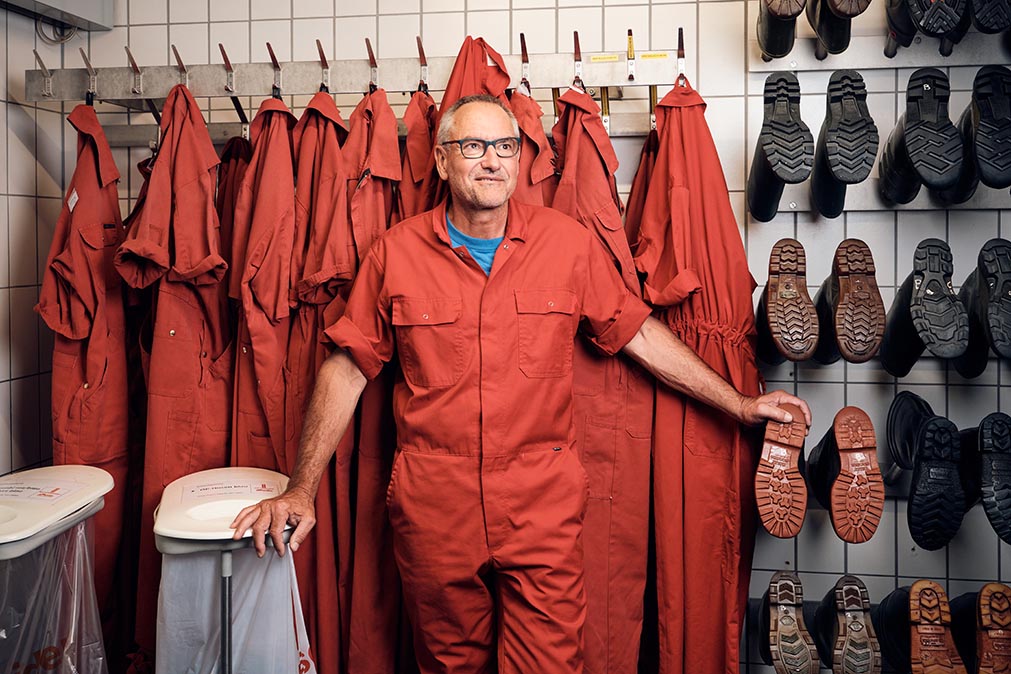
Interview with Beat Guggisberg, Necropsy Technician
When do you feel that your work is particularly meaningful?
Every day actually. We perform necroscopies to determine the causes of death in animals – whether they are pets, livestock or horses. This helps pet owners gain clarity about their loss, and supports farmers in identifying issues with animal husbandry or feeding so that future losses can be avoided. Our work is important for students as they can see first-hand how diseases manifest in the body, enabling them to connect the dots between their theoretical knowledge and practical experience.
How would you describe the work culture within your team?
We are a very diverse, international team with work colleagues hailing from all over the world – from Iran, Belgium and Egypt, just to mention a few. That makes my work so interesting and rewarding. I especially appreciate that theory and practice go hand in hand here: The academic perspective in my team perfectly complements my practical experience. This is how we continuously learn from each other. Even with students who are with us for a mere few weeks, it doesn’t take long before a genuine sense of team spirit is established.
What word do you think describes the University of Bern best?
It’s got to be diversity – both in relation to work and to the team. No two days are the same, and that’s exactly what makes it so interesting.
How do you structure your daily work?
We are a small team that also works on weekends and public holidays. This calls for flexibility and mutual support. I enjoy working with younger people – the mix of age groups and perspectives is good for our team.
Is your workday predictable?
Not at all. Some days we have hardly any cases, and the next we might have up to fifteen. Sometimes things have to move really fast – for instance, when there are multiple deaths and urgent investigations needed. This unpredictability keeps us on our toes and makes our work both challenging and interesting. Most of the animals are dogs, cats, cows or sheep, but occasionally there are exotic animals as well – anything from a 5.2-tonne elephant to a grasshopper weighing just 2.5 grams. Many of these animals come from zoos across Switzerland and are sometimes transported to us with the aid of the fire department. These cases often result in long shifts of up to fifteen hours.