
“We create knowledge that puts patients first.”
Maria Luisa Balmer has been an employee of the University of Bern since 2021. As an SNSF-Eccellenza Professor, she leads her own research team and works at the interface of nutritional medicine, microbiology, immunology and clinical research. In this interview, she shares how her research contributes to the greater good of society, the culture she fosters in her team and why networking is crucial for her research.
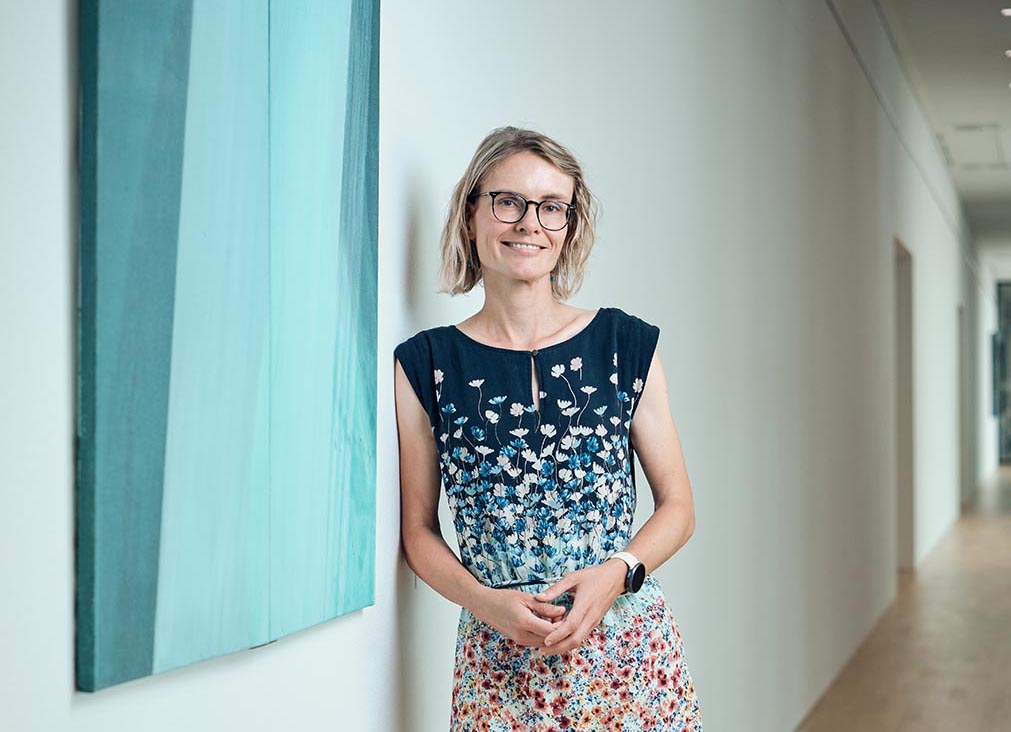
Interview with Maria Luisa Balmer, SNSF-Eccellenza Professor and Research Group Leader
In what way does your work support the vision of the University of Bern – “Create value for yourself and for society”?
I lead a team of researchers dedicated to generating new knowledge – always with the goal of gaining insights for the benefit of society. Specifically, our research focuses on improving treatment outcomes for patients suffering from obesity or diabetes.
How would you describe the work culture within your team?
Collaborating as equals is particularly important to us. We pursue a shared vision and foster a strong sense of team spirit. Each team member has a unique background and perspective to offer – and we highly value this diversity. Creativity and personal initiative are explicitly encouraged.
What does the buzzword “interconnected” mean to you?
Our research operates at the intersection of various disciplines – we couldn’t achieve what we do alone. That is why interconnectedness within the university and with international partners is a must-have. We collaborate with experts in Stockholm, Cambridge, Tübingen, Munich and the USA. The University of Bern has a very good reputation which facilitates collaboration.
Tell us about your academic career.
I earned my degree and my PhD at the University of Bern. Subsequently, I worked for the University of Basel and later returned to Bern to complete my residency in clinical medicine. The SNSF-Eccellenza professorship provided the platform to build my own research group – a major step in my career. In recent years I have also learned a great deal about leadership, complemented by the completion of a CAS (Certificate of Advanced Studies) program.
Is there such thing as a typical workday for you?
No, not really – and that’s the beauty of it. Every day brings its own set of tasks – research, teaching, team meetings, international collaborations or writing grant proposals and research articles. This diversity is what makes my work so exciting and rewarding.